Sport
How do you manage performance anxiety in sport?
Performance anxiety in sport is rarely about inadequate preparation – more often, it arises because the performance matters a great deal. Here are eight practical strategies for managing nerves, pressure, focus and confidence before training and competition.
By Evalotta Eriksson · Published 2 July 2026 · Read in Swedish
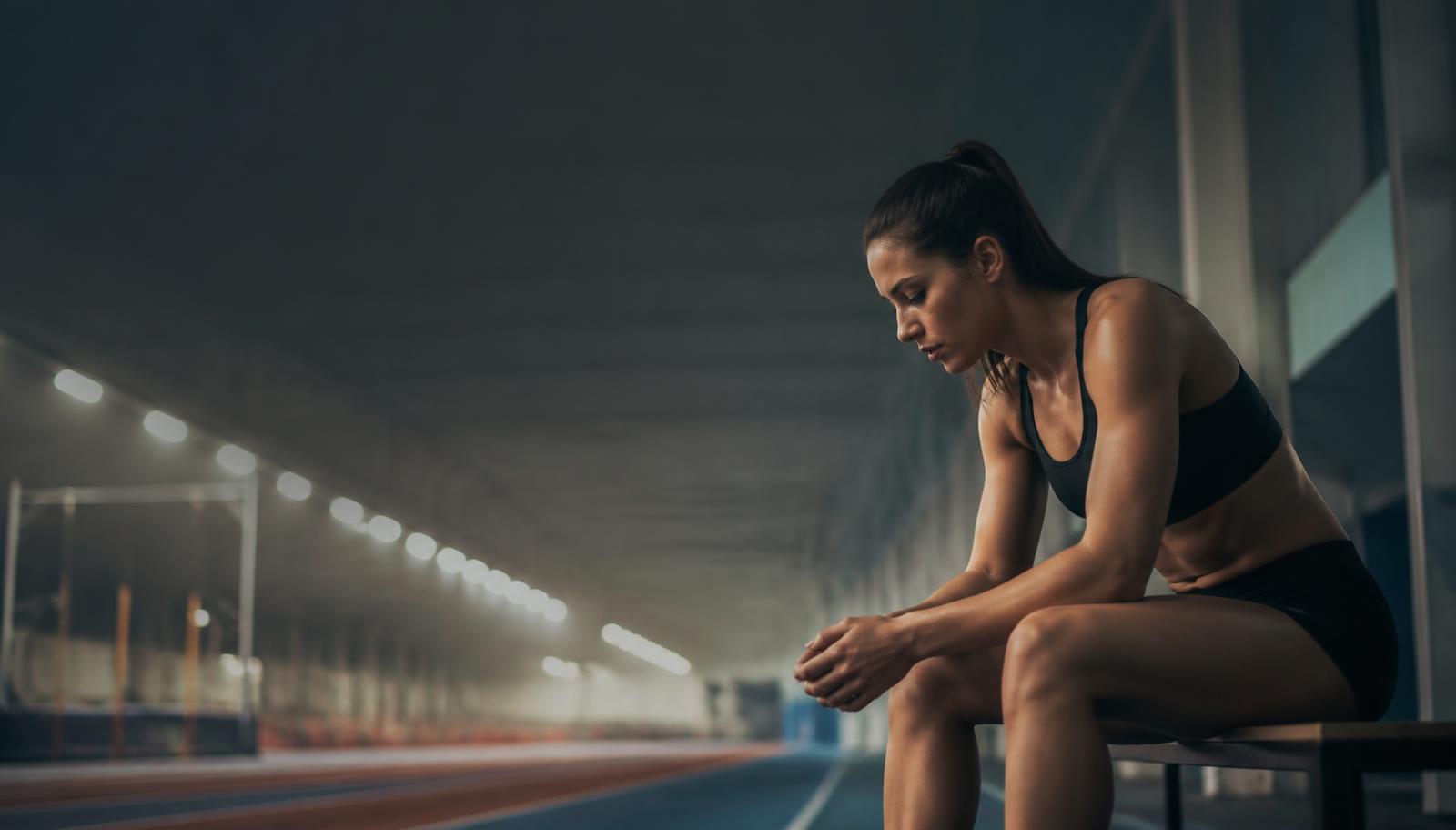
Feeling pressure before a competition is common. For some, nervousness provides extra energy, while for others it can lead to negative thoughts, tension and fear of failure.
Performance anxiety does not mean you are poorly prepared or mentally weak. It often arises precisely because the performance matters a great deal to you. With the right mental strategies, you can change how you relate to pressure and direct your attention towards what you can actually influence.
What is performance anxiety in sport?
Performance anxiety in sport is intense worry before or during a performance, often linked to the fear of failing, embarrassing yourself or not living up to expectations – your own or other people's.
The difference between competition nerves and performance anxiety. Nervousness before competition is a normal activation of the body: your heart rate rises, your breathing speeds up and your senses sharpen. It usually subsides once you get going. Performance anxiety is more persistent and more driven by thoughts. It often starts several days beforehand, returns during competition and causes you to start avoiding situations where you might be judged. Nervousness is about I'm about to perform. Performance anxiety is about what if I'm not good enough.
Why pressure arises. Pressure arises when something feels important and the outcome is uncertain. The more you have invested – time, identity, hopes – the greater its perceived importance becomes. Selection trials, spectators, parents, coaches, social media and personal goals intensify the feeling. Pressure itself is not the problem; the problem arises when you interpret pressure as a threat rather than a challenge.
How thoughts, emotions and the body are connected. The thought "what if I miss again" triggers a stress response: a tense neck, shallow breathing, stiffer movements and a narrower field of vision. The tense body then reinforces the thought – "I can feel that things aren't clicking today" – and a negative spiral begins. It is rarely the feeling itself that undermines performance, but rather the struggle against it and the attention it takes away.
Nervousness does not automatically lead to poorer performance. Research in sport psychology often describes how the same physiological activation can be interpreted as either a threat or a state of readiness. Athletes who interpret a racing heart as "I'm ready" generally perform better than those who interpret the same signal as "something is wrong". The goal, then, is not zero nervousness, but a different relationship with it.
Common signs of performance anxiety
- Overthinking – you analyse technique, tactics and possible outcomes over and over again.
- Fear of making mistakes – you play not to lose rather than to win.
- A tense body – stiff shoulders, a tight grip, short breaths, an unsettled stomach.
- Negative self-talk – "I can never do this", "everyone can see how bad I am".
- Difficulty focusing – your attention jumps between results, spectators and your own feelings.
- Excessive focus on results – you count points, placings or time instead of carrying out the next task.
- Fear of what others will think – your coach's expression or your teammates' reactions guide you more than your own plan does.
- Difficulty sleeping and irritability in the days before competition.
Occasional signs are completely normal. When several recur every time, affect your everyday life or cause you to avoid competition, it is worth working on them systematically – and, if the anxiety is pronounced, also talking to a coach or healthcare professional.
8 ways to manage performance anxiety in sport
1. Accept nervousness instead of fighting it
Trying to suppress a feeling usually gives it more power. Instead, try naming it: "I'm nervous now. That means this matters to me." Allow the feeling to be present in your body while you do what you need to do. A swimmer who accepts butterflies in their stomach on the starting block does not need to spend energy trying to get rid of them – that energy can go into the start.
2. Shift your focus from the result to the task
You cannot control results directly. You can control tasks. Replace "I have to win" with a specific task focus: "high elbow on the first serve", "push through the whole foot on the uphill section", "read the green from behind". Write down three task goals before each competition and evaluate them afterwards. The same principle is described in the article on how to perform under pressure in sport.
3. Create a clear pre-competition routine
A routine reduces the number of decisions you need to make and gives your brain something predictable to settle into. Decide when you will eat, when you will arrive at the venue, what your warm-up will look like and what you will do in the final five minutes. The routine should be the same whether it is a practice match or a final – that way, it becomes an anchor when nervousness rises. In golf, the pre-shot routine is a clear example; see how to manage competition nerves in golf.
4. Use breathing to regulate stress
Breathing is the quickest way to influence the nervous system. A simple approach: breathe in through your nose for four seconds, then out for six to eight seconds, for five to ten breaths. A longer exhalation than inhalation dampens the stress response. Practise breathing during training – not for the first time in a decisive situation.
5. Practise constructive self-talk
Constructive self-talk is not pretend positive thinking, but language that directs your attention appropriately. Replace "don't mess this up now" with "play forward". Replace "I can't do this" with "I'll do one thing at a time". Prepare two or three short cue words to use between points, holes or heats. The shorter and more action-oriented they are, the better they work under pressure.
6. Visualise how you want to act – not just the result
Many people visualise victory and overlook the path to it. Instead, practise seeing yourself handle the things that usually unsettle you: an early mistake, a poor refereeing decision, an opponent pulling ahead. See how you breathe, what you say to yourself and what you do next. Five minutes, three times a week, does more good than one long session the day before competition.
7. Practise in situations that simulate pressure
The body learns to handle pressure through exposure. Introduce consequences into training: the final set decides the outcome, the result is recorded, you train when tired, someone films you. The aim is to make the feeling of competition a familiar experience. Start with low pressure and gradually increase it – this also builds mental strength over time.
8. Evaluate your performance based on what you could influence
After competition, ask three questions. What did I do well, regardless of the result? What could I control but failed to do? What will I take into next time? An evaluation focused solely on placing teaches you nothing and feeds fear. Evaluating the process builds confidence as an athlete because you gather evidence that you can influence your performance.
What should you do just before competition?
A short routine in the final minutes goes a long way. Use it in the same order every time:
- Pause. Break the pace for ten seconds. Stand still and relax your shoulders.
- Take a few calm breaths. Three to five breaths with a longer exhalation.
- Accept the feeling. "I'm nervous – that's part of this."
- Remind yourself of what you can control. Effort, routine, attention, body language.
- Choose your first specific focus. Just one thing: the first pass, the first breath in the water, the first contact with the ball.
- Begin without trying to predict the result. Engage with the task, not the outcome.
Common mistakes
- Trying to get rid of all nervousness. The goal is manageable activation, not the calm you feel on the sofa.
- Thinking too much about the result. Focusing on results in the middle of a performance takes attention away from execution.
- Comparing yourself with opponents during the warm-up. You see their best shots and your own doubts.
- Interpreting nervousness as a sign that something is wrong. The signal usually just means that this matters.
- Changing routines just before competition – new equipment, a new warm-up and last-minute advice increase uncertainty.
- Linking your self-worth to the result. If every competition becomes a test of whether you are good enough as a person, the pressure becomes unreasonable.
Performance anxiety in different types of sport
How it manifests varies with the nature of the sport. In precision sports such as golf, shooting and archery, anxiety often appears as overanalysis and stiffness in fine motor movements – the body "locks up" during execution. In explosive sports such as athletics and swimming, it more often manifests as increased muscle tension and excessive activation, making movement less efficient. Team sports add a social dimension: the fear of letting the team down can cause players to avoid the ball or choose the safe pass rather than the right one.
Age also matters. Young athletes often find it harder to separate who they are from how they perform, and are more affected by adults' reactions. Coaches and parents can make a big difference here by asking "how did it feel?" instead of "how did it go?", and by praising effort and decisions rather than results.
How to know it is starting to work
Progress rarely shows up immediately in the results. Instead, early signs include recovering more quickly after a mistake, being able to describe what you focused on during competition, recognising nervousness without getting swept up in it, and looking forward to competing again. Once these pieces are in place, results usually follow.
How to build on your progress
Performance anxiety rarely disappears through a single technique. It decreases when you build a stable foundation: clear routines, task focus, training under pressure and honest evaluation. Many people also discover that their motivation changes along the way – from performing for other people's sake to performing because it feels meaningful. If that sounds familiar, read more about how to find intrinsic motivation and the foundations of mental training.
Working on the mental side is like practising technique: short, regular sessions produce results over time. Choose one of the eight strategies above and use it consistently for four weeks before adding the next.
Frequently asked questions
Why do people experience performance anxiety in sport?
Performance anxiety arises when something feels important and the outcome is uncertain. Fear of failure and expectations from yourself, coaches, parents or spectators cause the body to interpret the situation as a threat. It is a sign that the performance matters a great deal to you – not that you are poorly prepared or mentally weak.
How do you calm down before a competition?
Use a short routine in the final minutes: pause, take three to five calm breaths with a longer exhalation than inhalation, accept the feeling, remind yourself of what you can control, choose your first specific focus and then begin without trying to predict the result.
Is it normal to feel very nervous before competition?
Yes. Nervousness is the body's normal way of getting ready: your heart rate rises, your breathing speeds up and your senses sharpen. It usually subsides once you get going. However, if the worry persists for several days, returns every time and causes you to avoid competition, it may be more intense performance anxiety that is worth working on systematically.
Can mental training help with performance anxiety?
Yes. Mental training involving breathing techniques, task focus, competition routines, constructive self-talk, visualisation and practice in situations that simulate pressure helps you develop a different relationship with nervousness. The effect comes from short, regular sessions over time – just like practising technique.
How do you build greater confidence before competition?
Build your confidence on things you can influence. Evaluate your performances based on effort, routine and decisions rather than placing, gather concrete evidence of progress and practise regularly in situations that resemble competition. Your confidence will then rest on your process rather than your latest result.